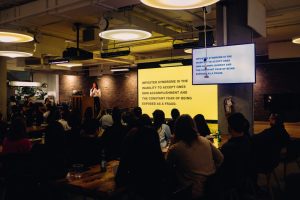

The Seventeenth International Writing Across the Curriculum Conference was held at Colorado State University July 16-19, 2025. It was held in a hybrid format, with speakers and attendees participating in-person and online. More than 340 individuals participated in the conference, with roughly 270 attending in person. Each of the plenary sessions and more than a dozen of the sessions were recorded and are available for viewing.
You can view the complete IWAC 2020 Conference archive, as well as the archives for more than 15 other conferences, in the WAC Repository’s Conference Archives and Edited Collections section.
Note: Because a large number of YouTube videos are embedded in this page, it may take some time for the page to load fully.
Plenary Sessions
Thursday, July 17, 12:00 to 1:45 | Lunch, Welcome, and First Plenary Presentation
Building Culturally Sustaining Practices: WAC at Hispanic-Serving Institutions
Plenary Presentation by Lizbett Tinoco.
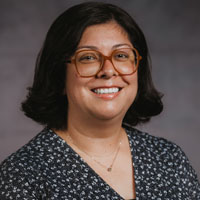 Lizbett Tinoco is an Associate Professor of English and Director of Writing Across the Curriculum at Texas A&M University, San Antonio. Her areas of research include writing program administration, two-year college writing studies, and antiracist writing assessment. She currently serves as an assistant editor for the Journal of Writing Assessment. Her work has been published in Community College Journal of Research and Practice, Journal of Writing Assessment, Teaching English in the Two-Year College, Composition Forum, and various edited collections.
Friday, July 18, 12:00 to 1:45 | Lunch, Awards, and Second Plenary Presentation (Lory Student Center, Main Ballrooms)
Reading, Writing, and Wondering: Meaning Making in Biology
Plenary Presentation by Meena Balgopal
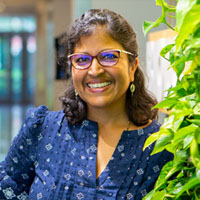 Meena Balgopal has always explored how to integrate biology, rhetoric, and helping people learn. She earned a BS in Animal Sciences (focusing on international development) from the University of Illinois – Urbana-Champaign and an MS in Entomology from the University of Wisconsin, Madison. She served as an entomology extension agent in California, helping walnut and almond growers decrease pesticide use. She was a secondary science teacher in Arizona and North Dakota. She received her PhD in Zoology/Science Education at North Dakota State University. She moved to Colorado State University in 2008 and now studies science pedagogy, science communication, and meaning making in the department of biology. She became a University Distinguished Teaching Scholar in 2022. All throughout her moves, she has been able to add to her birding life list.
Opening Remarks and Awards Ceremony
Plenary Address and Closing Remarks
Saturday, July 19, 12:00 to 1:45 | Lunch, Third Plenary Talk, and Concluding Remarks (Lory Student Center, Main Ballrooms)
Insights from WAC Programs Around the Globe: Issues and Energies in Changing Times
Plenary Presentation by Laurie A. Britt-Smith, College of the Holy Cross; Cris Elder, University of New Mexico; Crystal N. Fodrey, University of Louisville; Kristi Girdharry, Babson College; Swan Kim, CUNY Brooklyn; Justin K. Rademaekers, West Chester University; and Paula Rosinski, Elon University
Plenary Address and Closing Remarks
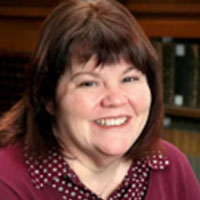 Laurie A. Britt-Smith is the Director of the Center for Writing (WAC work plus Writing Center) at the College of the Holy Cross in Worcester, Massachusetts, and served as treasurer for AWAC for six years. She continues her WAC work and is also interested in rhetorics of social justice.
 Cris Elder is Associate Professor in rhetoric and writing at the University of New Mexico in Albuquerque. She completed her term as the chair of AWAC in June 2025.
 Crystal N. Fodrey is Associate Professor of English (NTT) at the University of Louisville. Her empirical research explores writing activity across disciplines and contexts, with a focus on the teaching of writing and administering of writing programs. She is excited to serve the WAC community this year as Chair of the Association for Writing Across the Curriculum.
 Kristi Girdharry Associate Teaching Professor of English and Director of the writing center at Babson College in Wellesley, Massachusetts, where she teaches courses on research, writing, social media, and artificial intelligence. You can find her most recent scholarship in Business and Professional Communication Quarterly, Double Helix: A Journal of Critical Thinking and Writing, and College Composition and Communication.
 Swan Kim Professor of English and Director of Composition at Brooklyn College. Her research and teaching interests include first-year writing, writing across the curriculum, multilingual writing pedagogy, and writing program administration.
 Justin K. Rademaekers Professor of English Rhetoric at West Chester University of Pennsylvania where he directs the English M.A. degree and Writing Across the Curriculum Program. He is a founding member of AWAC and has served on the AWAC Executive Committee since the organization’s inception, completing his term as Outgoing Chair in June 2025. His scholarship focuses on university writing curricula informed by the rhetoric of science, interdisciplinary collaboration, and discourse theory.
 Paula Rosinski is Professor of Professional Writing & Rhetoric and Director of Writing Across the University in the Center for Writing Excellence at Elon University. where she co-coordinates the Disciplinary Writing Consultants program, co-chairs her institution’s AI Task Force, and previously led her institution’s Quality Enhancement Plan on Writing Excellence. She serves on the Association of AWAC Executive Committee (previously as member-at-large and currently as treasurer).
Sessions
A.2 Global Perspectives on WAC: Redesigns, Placements, and Pedagogical Challenges
Area: WAC Program Design and Leadership
Chair: Megan Callow, University of Washington, Seattle
Presenters:
Magnus K. H. Gustafsson, Chalmers University of Technology, “Translating WAC and WEC to a European Context for Sustainable Writing Development Support”
Megan Callow and Rebecca Taylor, University of Washington, Seattle, “Informed Self-Placement? Examining a Task-Free, Online Directed Self-Placement Model at the University of Washington”
Tobias Lee, Hong Kong Polytechnic University, “Addressing the Feedback Conundrum in Hong Kong: A Case Study in Transnational Composition and WAC as a Global Movement”
Abstract: This panel explores Writing Across the Curriculum (WAC) practices and innovations in diverse global contexts, highlighting program redesigns, placement models, and pedagogical challenges. The first presentation examines the redesign of a European writing program through a Writing-Enriched Curriculum model, emphasizing faculty collaboration, assignment development, and tailored student writing pathways. The second presentation assesses an innovative, fully student-empowered placement approach, considering its implications for inclusion and linguistic justice. The third presentation explores the challenges of feedback, generative AI, and writing pedagogy in a large English-as-a-medium-of-instruction university. Together, these presentations offer insights into the evolving global landscape of WAC and writing pedagogy.
Materials: View Megan Callow and Rebecca Taylor’s Presentation Slides | View Tobias Lee’s Presentation Slides
A.7 Studies of Writing Across the Curriculum
Type of Session: Panel
Area: WAC Pedagogies and Practices
Chair: Tony Mangialetti, Texas Tech
Presenters:
Stephen McElroy and Kristi Girdharry, Babson College, “Thinking WAC with a Longitudinal Study of Writing Transfer”
Neve David Eilam and Laura Baumvol, The University of British Columbia, “Collaborative Writing Pedagogy: Exploring Students’ Experiences in a First-Year Research Writing Course”
Tony Mangialetti, Texas Tech, “Community Across the Curriculum”
Abstract: This panel explores the results and insights drawn from three study of the use of writing to support student learning. The first presentation reports on an ongoing longitudinal study of students’ perceptions of and experiences with writing during their time at an undergraduate business college and examines ways these findings might point to specific WAC initiatives that could positively impact students’ literate practices across the institution. The second presentation explores students’ experiences with collaborative writing in a first-year research writing course that adopts a writing-in-the-disciplines approach. The themes emerging from the study highlight benefits such as improved learning, engagement with diverse perspectives, classroom community development, and collaborative skill-building. Themes concerning challenges perceived by students include workload, group disagreements, and grading criteria. The third presentation reports the results of interviews with faculty at a large Western university and nationally recognized WAC scholars. The results of the study led to the creation of seven principles to guide the development of sustainable WAC programs. The talk focuses on one principle: WAC initiatives can create community for faculty across their campus, or "community across the curriculum.”
A.8 Artificial Intelligence and Technological Innovations Across the Curriculum
Area: WAC and Technology
Chair: Emily Hall, University of Wisconsin, Madison
Presenters:
Pauli Lai, Hong Kong Polytechnic University, “Enhancing Writing Education through Generative AI: Affordances and Challenges in Writing Across the Curriculum”
Olha Ivashchyshun, Ivan Franko National University of Lviv, “Innovative Resources for Developing Academic Writing Skills in English Classes”
Emily Hall, University of Wisconsin, Madison, “Democratic Approaches to Generative AI: WAC’s Role in Moving Beyond Surveillance and Submission”
Abstract: This panel explores innovations of WAC and technology including the role of artificial intelligence in the context of student learning. The first speaker discusses “the development and implementation of AIReAS (AI Review Assessment System), a rubric-based generative AI platform designed to provide immediate, content-focused feedback to university students on their writing assignments” including “improvements in student writing outcomes and favorable feedback from both students and teachers.” The second speaker explores TALAS, a web-application that creates an online environment for teaching English, including Academic Writing. The speaker argues that the methodology underlying TALAS will support the development of new approaches to teaching AW in English classes, designing new courses that integrate AW and Information technologies, and suggest strategies that can be adapted by other teachers to suit their particular teaching and learning contexts. The third speaker, drawing on philosopher Annette Zimmerman’s work on “democratizing AI” proposes a framework that brings student writers’ voices into decisions about AI’s role in writing assignments and activities. Rather than positioning faculty as either police or promoters of AI, this framework posits instructors and students as co-investigators of AI’s role in relation to writing processes and as co-developers of critical AI literacy—understanding AI’s inherent bias and its social, environmental, and labor impacts in addition to its generative capabilities.
A.9 Seeking Inclusion: Motivating Factors and Techniques to Encourage Faculty Across the Disciplines to Participate in Writing Centers
Type of Session: Roundtable
Area: WAC Pedagogies and Practices
Chair: Susan Murphy, Texas A&M University, Corpus Christi
Presenters: Damon Meyer, Nicholas Valley, Jill Dahlman, and Kristopher Keane, California Northstate University College of Health Sciences
Respondents: Jill Dahlman and Damon Meyer, California Northstate University College of Health Sciences
Abstract: The motivating factors that encourage undergraduate student participation in writing centers have been extensively described (LeCourt, Villanueva, Harris, Zawacki & Cox, etc.). Do we require visits? Do we leave students on their own to discover the writing center? Who should staff the writing center as consultants (student peer consultants or professional consultants)? These questions (and more like them) have been addressed; however, little research regarding faculty motivation to participate in writing centers as consultants, administrators, and volunteers from across the disciplines exists. Similar questions, though, are pertinent. In a small college/department environment with limited faculty, two inquiries arise: 1) What are the benefits of staffing the writing center with faculty who do not specialize in writing, and 2) How do we encourage/guide faculty to participate? This roundtable brings together an Assistant Dean of Faculty and Pedagogy, co-directors of the writing center and participating faculty from the natural sciences to discuss the merits and the positive outcomes observed in our college when faculty across the disciplines participate in the writing center. We seek audience participation in an interactive discussion on increasing faculty participation from multiple disciplines/departments in writing centers as well as its impact on students, faculty, and college.
B.2 Exploring the Jagged Frontier: Generative AI and Undergraduate Writing in Engineering, Computer Science, and Scientific and Technical Disciplines
Area: WAC and Technology
Chair: Matthew Luskey, University of Minnesota
Presenters:
Waverly Tseng, University of California, Irvine, “PapyrusAI: A Multiyear Study of Student Interaction with AI and Evolving Pedagogies”
Phil Barry, University of Minnesota, “A Large Variance of AI Use and Fluency in an Undergraduate Computer Science and Ethics Course”
Daniel Emery, University of Minnesota, “What Science and Engineering Faculty Talk About When They Talk About Generative AI”
Matthew Luskey, University of Minnesota, “Inductivism and Exploration: Supporting the Teaching with Writing in an Age of AI ”
Respondents: Patrick Bonczyk, University of California, Irvine
Abstract: Ethan Mollick (2024) and others (2023) describe the leading edge of Generative Artificial Intelligence (GenAI) technologies as a “jagged frontier.” The metaphor works in two ways: first, it describes the uneven progress and adoption of these tools in workplaces (despite the gold rush promises of many tech companies), and, second, it describes how AI tools sometimes appear to easily succeed at complex writing tasks while struggling mightily with some tasks that human writers find simple. In this panel, we extend this metaphor by exploring case studies in the context of undergraduate education in science and technical fields. Our panel, composed of subject-matter graduate instructors and faculty in engineering and computer science and writing across disciplines specialists, explores case studies on the uneven adoption and complicated performance of generative AI technologies. We’ll show how our case studies reveal important distinctions and nuances in how generative AI conversations may affect student writing, including predictions about AI’s potential to automate, augment, or transform students’ writing development.
B.5 WAC in the Age of Generative AI: Sustainability, Innovation, and Human Agency
Area: WAC and Technology
Chair: Joseph M. Moxley, University of South Florida
Presenters:
Susanne Hall, California Institute of Technology, “Sustainability Concerns Raised by Incorporating Generative AI in Writing Curricula: Questions and Considerations for WAC/WID”
Joy Bracewell, Gongbing Hong, and Ward Risvold, Georgia College & State University, “Balancing Innovation and Personalization: Examining AI Diagnostic Tools in Writing Center Tutoring Across Disciplines”
Joseph M. Moxley, University of South Florida, “Preserving Human Agency in the Age of AI: A Call for WAC Leadership on Authorship and Integrity”
Abstract: As WAC and writing programs integrate generative AI tools into their pedagogies, we face complex questions that will shape the direction, sustainability, and effectiveness of those programs. The presenters on this panel address issues that, in some cases, have been overlooked in recent discussions of generative AI’s impact on teaching and learning. The first speaker raises questions about sustainability—in particular, generative AI’s environmental footprint—that have been largely overlooked in current discussions. The second speaker argues that generative AI has redefined the writing landscape, raising questions about its implications for writing center tutors addressing unfamiliar disciplinary conventions. Drawing on a pilot study that explores the potential for an AI tool developed by a business professor to assist tutors in identifying discipline-specific writing features, the speaker considers how this project helps us understand how we might integrate AI into tutoring practices as a complement to, rather than a replacement for, human judgment. The third speaker points out that the rise of generative AI destabilizes core notions of authorship, copyright, intellectual property, and academic integrity, placing students’ future reputations and careers at risk. Arguing that WAC leaders are uniquely positioned to address these challenges by developing coherent, evidence-based policies that preserve human agency, the speaker emphasize the urgency for our field to lead in maintaining human control over the writing process.
B.9 Training Undergraduate STEM Majors to Join Faculty in Primary Research into WID Pedagogy in their Science Disciplines
Area: WAC Pedagogies and Practices
Chair: Susan Murphy, Texas A&M University, Corpus Christi
Presenters: Emily Mills Ko, Tereza Joy Kramer, Jasmeen Bains, Alexandra Greenleaf, Emaan Rahmanzai, Lucas Tang, and Neil Sohal, California Northstate University
Respondents: Tereza Joy J. Kramer, California Northstate University
Abstract: Training undergraduate STEM majors in the methodologies and rationales that undergird Humanities research offers a multiplicity of benefits. Future scientists gain skills and appreciation for the value of Humanities research, while Humanities professors broaden the perspectives of their research teams. STEM students might not be aware that their futures may hold as much opportunity for mixed-methods research as for strictly laboratory work. Therefore, we are called to teach them how to conduct thematic coding, statistical analysis, and other RAD research methods that inform Humanities academic research but also could inform their future careers and the world at large. We are a writing professor, an immunology professor, and two of the lead undergraduate researchers. Together, we will share how we designed our mixed-methods research into public-audience writing in both science and writing courses, and how we are conducting the data analysis and thematic coding as a team. We will unpack the students’ struggles understanding Humanities research methods and reflect on what this generative process is teaching all of us. As part of the interactive portion of the panel, we will engage participants in thinking about whether and how to attract science students to their collaborative research table.
Materials: View the Presentation Slides
Friday, July 18
C.2 Moving the Center: Writing Center Support Across the Curriculum
Sponsored Session: RMWCA: Rocky Mountain Writing Centers Association
Type of Session: Roundtable
Area: WAC Pedagogies and Practices
Chair: Juli J. Parrish. University of Denver
Presenters: Christopher LeCluyse, Westminster University; Laura Feibush, Penn State Harrisburg; Emily Forcier, Metropolitan State University of Denver; and Melody Denny, St. Lawrence University
Respondents: Juli J. Parrish, University of Denver
Abstract: Writing centers are sites where tutors, students and faculty are constantly working across the curriculum; writing center tutor training materials shape these interactions between tutors and writers. Many scholars have discussed the important roles that writing centers play in WAC and WID efforts (Haviland, 2003; Robinson & Hall, 2013; Pittock, 2018); this panel continues this conversation by highlighting the ways that writing center tutor training practices might inform—and be valuable to—faculty and student writing across the curriculum. In this roundtable, four writers published in Center Moves: A Peer-Reviewed Archive of Tutor Training Materials will discuss how their writing center trainings support WAC efforts in ways essential to the writing center and transferable to other contexts. After the presentations, attendees will discuss how tutors’ collaborative practices in writing centers can transfer to and inform faculty writing practices in the classroom and across the curriculum.
Laura Feibush’s Presentation
C.4 Reflections on Award-Winning Scholarship
Sponsored Session: AWAC: Association for Writing Across the Curriculum
Type of Session: Roundtable
Area: The Challenges that Unite Us as a Community
Chair: Justin K. Rademaekers, West Chester University of Pennsylvania
Presenters: Gabriel Cutrufello, York College of Pennsylvania; Heather Falconer, University of Maine; Angie Rounsaville, Arizona State University; Laurie Stankavich, Southern Adventist University; and Omar Yacoub, West Virginia University, Morgantown; and Michael J. Zerbe, York College of Pennsylvania;
Abstract: This roundtable discussion will look back on award winning scholarship from IWAC 2023 sponsored by AWAC and the WAC Clearinghouse to discuss current and new directions for the research from these accomplished scholars and authors.
Gabriel Cutrufello and Michael J. Zerbe’s Presentation
Omar Yacoub’s Presentation
C.5 Emerging WAC: Negotiating the Early Stages of an Informal WAC Program
Area: WAC Program Design and Leadership
Chair: Barbara E. George, Carnegie Mellon University
Presenters: Barbara E. George, Jeremy Rosselot-Merritt, Alan Kohler, and Julie Pal-Agrawal, Carnegie Mellon University
Respondents: Barbara E. George, Carnegie Mellon University
Abstract: Our case study explores emerging practice in an informal WAC program at Carnegie Mellon University in Pittsburgh, PA. Our presenters include instructors who teach the Writing for the Professions course and a Professional Communication in Engineering course to upperclassmen across many disciplines. The courses generally focus on genre and rhetorical knowledge as students begin to consider professional identities beyond the classroom. Until recently, the courses have consisted of students in mixed disciplines in each class. However, in the last two years, we have dramatically expanded our offerings to include sections of the course that offer more discipline and genre-specific learning groups that meet requirements for specific programs or colleges – and one course offered in the engineering curriculum. This case study shares how our programming has shifted in recent years, including our early efforts to plan more robust sustainable WAC principles and theoretical principles shared in the IWAC training, including institutional assessment, reaching out to stakeholders to understand institutional ecologies as related to writing within disciplines on our campus, and to planning instructor and student assignments and supports accordingly. This case study also adds to conversations about informal WAC program planning as lecturer lines continue to expand in higher education.
Materials: View the Presentation Slides
C.8 Business Writing Across the Curriculum and WAC in Computer Science
Area: WAC Program Design and Leadership
Chair: Lindsay Clark, Sam Houston State University
Presenters:
Qian (Fiona) Wang, North Carolina State University, “Using Portfolio to Foster Reflection and Active Learning in Business Communication – Enhancing Communication Skills Across Curriculum”
Lindsay Clark, Sam Houston State University, “Podcasting in a Business Course to Address Communication Apprehension”
Leslie Ann Roldan, Massachusetts Institute of Technology, “WAC Adaptations to the Rise in Computer Science Degrees”
Abstract: This panel explores writing innovations in business communication courses and WAC pedagogies in STEM disciplines. The first speaker discusses the role of writing and self-assessment and reflection through portfolio assignments that support student learning. The second speaker discusses the role of podcasting in addressing communication apprehension in business communication courses. The third speaker reports on the writing and speaking skills acquired by students who pursue an interdisciplinary degree that combines computer science with another discipline such as biology or economics. Focusing on the communication assignments in courses taken by these students over the past 10 years, her analysis suggests sustainable approaches WAC programs can adopt not only to address the surge in computer science majors, but also to assess the effectiveness of communication instruction in interdisciplinary programs.
Qian (Fiona) Wang’s Presentation
D.9 Designing WAC: WEC, Writing to Engage, and Service Learning
Type of Session: Panel
Area: WAC Pedagogies and Practices
Chair: Jesse McLain, Colorado State University
Presenters:
Kirsti Cole and Roy Schwartzman, North Carolina State University, “Revitalizing Writing Enriched Curriculum: Leveraging Institutional Ethnography for Program Design”
Cameron F. Bushnell, Clemson University, “Writing to Engage: Toward Activated WAC Programming”
Annie Halseth and Annie Krieg, Colorado State University, "WAC Curriculum Fellowships: Partners Across the Curriculum"
Abstract: The presenters on this panel offer new approaches for designing effective WAC programs. The first presentation explores how concepts from institutional ethnography (LaFrance and Nicholas 2012) and institutional literacy (Cole, Hassle, and Giordano 2023) can be used to situates WAC programs as a pivotal resource within broader institutional landscape, connecting departments, majors, and student needs. Highlighting the role of institutional relationships and program design in sustaining and growing WAC initiatives by linking support processes and units back to the individual departments and majors, this presentation offers practical tools for conducting institutional analysis and strategies for building or revitalizing WAC programs. The second presentation, drawing on the current understanding of writing-to-engage (WTE) as a “middle ground between writing-to-learn and writing-in-the-disciplines” (Palmquist, 2020), advocates integrating service-learning into WAC at the intersection of writing-to-engage. The speaker discusses the theory and practice of WTE reconsidered as we have implemented it at their university in three programs, arguing that creating an opening for SL at the center of WAC programming in the form of engagement allows WTE to becomes not only transitional between writing to learn and writing in the disciplines but also transformational for WAC programs. The third presentation discusses a course development initiative that pairs disciplinary faculty with writing specialists to collaboratively design writing interventions that address classroom-based challenges. These partnerships support genre awareness, foster critical inquiry, and promote transfer across the curriculum. Unlike traditional WAC models that focus solely on writing implementation, this initiative positions writing as a collaborative tool for understanding disciplinary ways of thinking and taking a student-centered approach to transforming curriculum.
E.2 Aligning Writing Concepts Across the First- and Second-Year Biology Curriculum
Area: WAC Pedagogies and Practices
Chair: Heather M. Falconer, University of Maine
Presenters: Mary PlymaleLarlee, Heather M. Falconer, and Julia McGuire, University of Maine
Abstract: This presentation describes activities to align the rhetorical practices and concepts taught in a required First-Year Writing (FYW) curriculum to first- and second-year Biology courses. The presentation will share strategy, tools developed, and findings showing improved understanding and implementation of citation practices and discourse conventions.
F.1 Critical Writing in Restrictive Contexts: Strategies for Antiracist and Inclusive WAC Practices
Area: The Role of WAC in Advancing Social Justice
Chair: Haivan Hoang, University of Massachusetts, Amherst
Presenters:
Brian Hendrickson, Roger Williams University, “Supporting STEM Literacy and Identity Development: Findings from a Communications-Focused Scholarship Program for Low-Income, High-Achieving Undergraduates”
Jessa M. Wood, University of Minnesota, “Writing Against the Curriculum: Quiet Criticality in the Face of Political Restriction”
Haivan Hoang, University of Massachusetts. Amherst, “WID Teachers’ Responses to the Idea of Asking Students to Write to Racially Diverse Audiences”
Abstract: This panel examines how WAC practitioners navigate politically restrictive environments and engage with issues of race and inclusion in their work. The first presentation shares findings from a qualitative interview study of the literacy trajectories of 15 undergraduate STEM students from historically underrepresented groups, with the aims of contributing to a growing body of research in writing across the curriculum on complex connections between literacy, identity, self-efficacy, and belonging. The second presentation explores strategies used by WAC leaders to sustain inclusive and antiracist initiatives under increasing political constraints, offering insights from a national study of 45 programs. The third presentation investigates faculty perspectives on integrating race-conscious practices into writing-in-the-disciplines courses, highlighting both challenges and opportunities for fostering antiracist pedagogies. Together, these presentations provide actionable strategies for advancing equity and inclusion in challenging political and institutional contexts.
F.4 WID Interrupted: Highs and Lows of a WID QEP’s Quest for Sustainability in Challenging Times
Area: WAC Program Design and Leadership
Chair: Lindsey Ives, Tacoma Community College
Presenters: Ann Marie Ade, Embry-Riddle Aeronautical University, Worldwide; Amelia Chesley, Embry-Riddle Aeronautical University, Prescott; Taylor Mitchell, Embry-Riddle Aeronautical University, Daytona Beach; and Lindsey Ives, Tacoma Community College
Abstract: This panel reviews the development and progress of a large-scale, long-term, Writing in the Disciplines-focused Quality Enhancement Plan (QEP) at a small STEM institution. Our "Writing Matters" QEP leadership team, comprised of writing studies faculty across 3 campuses, worked to follow the fifteen whole systems strategies that Cox et al. (2014) recommend in Sustainable WAC. These strategies allowed the program to grow and begin making a positive impact on student writing across disciplines. However, it has been challenging to balance the diverse priorities of various disciplines and the complexities of different campuses’ infrastructure. Additionally, shifts in institutional policy and increasing turnover among the program’s participants have posed additional hurdles for the initiative. Panelists will provide an overview of Writing Matters goals and interventions, and each speaker will then discuss their respective strategies for leveraging opportunities and responding to challenges. They conclude by estimating future outcomes for Writing Matters and sharing useful takeaways for managing a large-scale WID program made up of many semi-independent, flexible, faculty-led approaches.
Ann Marie Ade’s Presentation
Taylor Mitchell’s Presentation
G.9 The Potentials and Challenges of Localized WAC at a Regional HSI
Type of Session: Roundtable
Area: The Challenges that Unite Us as a Community
Chair: Manuel Piña, Texas A&M University, Corpus Christi
Presenters:
Manuel Piña and Susan Murphy, Texas A&M University, Corpus Christi, “Teaching-for-Transfer: Turning (Again) to Rhetoric and Process”
Christopher Andrews, Texas A&M University, Corpus Christi, “Storying Technologies: Testimonios For More Inclusive Online Writing Instruction”
Isaac Hinojosa and Andrea Montalvo, Texas A&M University, Corpus Christi, “The On-Going Evolution and Persistent Re/Imagination of Co-Requisite Support”
Respondents: Manuel Piña, Texas A&M University, Corpus Christi
Abstract: This roundtable foregrounds the unique potentials and challenges that accompany Writing Across the Curriculum programs and pedagogies within the context of a regional, R2 university that is designated both as a Hispanic and Minority Serving Institution (HSI/MSI). From implementing transfer-focused teaching practices and exploring inclusive online instruction to evolving co-requisite program models, this roundtable takes up the question/s of “servingness” and what it means to support a linguistically and culturally diverse student population through WAC principles. Through this roundtable, we aim to surface strategies that balance institutional expectations with the realities of serving traditionally marginalized communities.
Materials: View the Presentation Slides
H.5 The WAC Clearinghouse in 2025 and Beyond: Current Concerns and Future Challenges
Materials: View Mike Palmquist’s Presentation Slides
Type of Session: Roundtable
Area: Publishing in Writing Across the Curriculum
Chair: Michael A. Pemberton, Georgia Southern University
Presenters: Christopher Basgier, Auburn University; Ann Blakeslee, Eastern Michigan University; Lindsey Harding, University of Georgia; Mike Palmquist, Colorado State University; and Michael Pemberton, Georgia Southern University
Abstract: On this roundtable panel, the publisher and several associate publishers of the WAC Clearinghouse will provide a brief overview of its development, outline current concerns, and explore questions about its continued development. In particular, they will provide a “behind-the-scenes” look at some of the pressing ethical and practical concerns the Clearinghouse has been addressing recently, including diversity, accessibility, transparency, sustainability, technology, and visibility. The members of the roundtable will also offer perspectives on two issues relevant to future policies and publication guidelines—the impact of AI/LLM technologies and the sustainability of open-access publishing—and invite audience members to join the conversation.
H.7 Faculty Development Across the Curriculum and the Globe
Area: WAC Pedagogies and Practices
Chair: Kathryn Northcut, Missouri University of Science and Technology
Presenters:
Kathryn Northcut, Rachel Schneider, Michelle Schwartze, and Devin Burns, Missouri University of Science and Technology, “Focus on Faculty: Developing a Cross-Disciplinary Teaching Evaluation Rubric”
Amy Lannin and Linda Blockus, University of Missouri, “Enhancing High Impact Practices (HIPs) through Faculty Development and Course Pilot Program”
Shuting Zhang, Colorado State University, “Understanding the Writing Teachers’ Professional Development in a Chinese Teaching Contest”
Abstract: This panel will focus on the ways that faculty can develop and expand their use of WAC in a variety of disciplines and in a variety of ways to enhance and assess their own skill sets. Purposes, development, and use of the WAC strategies examined in the session will include self-evaluation, developing rubrics for multi-discipline teaching evaluations, enhancing high impact practices through faculty development, and writing-teacher specific professional development.
Kathryn Northcut, Rachel Schneider, Michelle Schwartze, and Devin Burns’ Presentation