

By Robert P. Yagelski
Copy edited by Annie Halseth. Designed by Mike Palmquist.
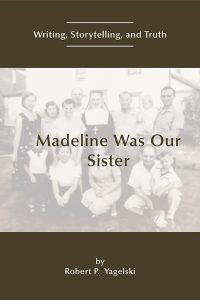
In Madeline Was Our Sister, Robert P. Yagelski explores the related propositions that writing about our experiences in the world can be an essential act of truth-seeking and that truth might reside in the experience of writing-in-the-moment rather than in the text or subject of the writing. A blend of theoretical inquiry, memoir, and narrative, Yagelski focuses on the process of writing a true story about his cousin, whose extraordinary life as a Catholic nun and activist raises complex questions about meaning, identity, family, and faith. That process becomes the vehicle for an extended inquiry into the ontological nature of writing and the relationships among writing, narrative, memory, and truth. In writing a story that encompasses his own evolution as a scholar and writer, Yagelski enacts the argument that the experience of writing-in-the-moment can be a transformative process of identifying the truths we need to make sense of our lives and to live together more humanely in a complicated and often treacherous world. Yagelski demonstrates how writing, as a practice of truth-seeking, can become a tool for living at a time when the very idea of truth is intensely contested. This inquiry has implications not only for how we think about writing as an act of meaning-making and narrative as a vehicle for truth-seeking, but also for longstanding debates about writing instruction, literacy education, schooling, and the never-ending struggle to determine what is true in both our public and private lives.

